

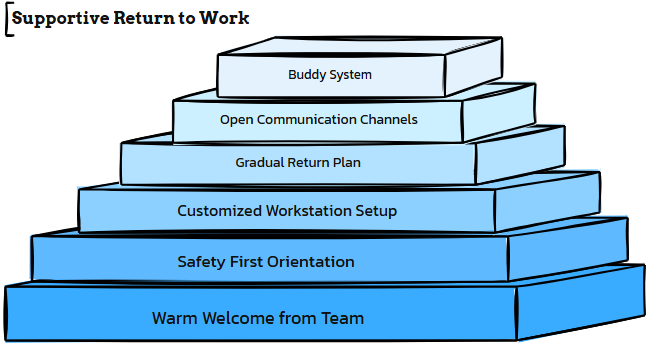
When workers return to the job after a serious injury, clinical recovery is only part of the equation. A growing body of research shows that supported return to work, where employers, supervisors, and coworkers actively facilitate reintegration is essential for positive outcomes.
A 2024 study published in Frontiers in Rehabilitation Sciences surveyed 93 injured workers in Saskatchewan who experienced work-related injuries with disability lasting more than 50 days. The findings offer clear insight: return to work isn’t just about matching job demands to functional abilities. It’s about creating workplace conditions where workers are supported and are actively involved with their workplace as part of their recovery.
The Role of Supervisor and Coworker Support
Nearly two-thirds of injured workers in the Saskatchewan study identified supervisor and coworker support as critical to sustained return to work. This wasn’t about paperwork or policy compliance, it was relational. Workers needed supervisors who checked in regularly, asked how they were managing, and demonstrated genuine concern for sustained return to the workplace.
Yet one-third of participants reported the opposite experience: they felt unsupported, misunderstood, or ignored during their return. Some said employers didn’t follow medical restrictions due to workload pressures. Others felt their injury was treated as an inconvenience rather than a shared challenge to solve together.
The message is clear: supported return to work programs succeed when workplace relationships are prioritized alongside clinical protocols.
Managing Job Demands with Autonomy and Flexibility
While recognizing some workplaces have a limit to the flexibility they can offer, return to work plans are often part of the recovery process and workers may be managing pain, fatigue, fear of reinjury, and emotional distress as part of the process.
Workers need trust. The study found when supervisors empowered employees to adjust their workflow within agreed-upon restrictions, workers gained confidence in their ability to perform safely. When that flexibility was absent, even well-designed accommodation plans struggled to hold.
Meaningful Modified Work
Modified duties are a cornerstone of return-to-work planning, but the Saskatchewan research underscores an important nuance: modified work must feel meaningful. Workers needed tasks that respected their current abilities while keeping them engaged and contributing to the team.
When modified work felt like “busy work” or carried stigma, it undermined motivation and reintegration. When it was purposeful and aligned with the worker’s skills, it reinforced their value to the organization and supported psychological recovery alongside physical healing.
Psychosocial Factors: Being Seen and Valued
Beyond physical accommodations, injured workers emphasized psychosocial support: feeling recognized, valued, and cared about. Workers described needing to know their employer understood the vulnerability of their situation. Simple gestures, “How are you doing today?” or coworkers offering help without judgment made a significant difference.
Supported return to work isn’t just a program. It’s a culture. When workplaces foster trust, empathy, and open communication, injured workers are more likely to stay engaged, manage symptoms effectively, and achieve sustainable outcomes.
Building a Culture of Supported Return to Work
The Saskatchewan study reinforces what evidence-informed practice has long shown: sustainable return to work depends on more than clinical assessments and job demands analysis. It requires workplaces where supervisors are trained to support reintegration, coworkers understand their role, and injured workers are treated with dignity throughout their recovery.
At Bridges Health, we see this philosophy in action every day. When collaboration, flexibility, and genuine care are embedded into return-to-work planning, workers thrive and organizations benefit from healthier, more engaged teams.
Supported return to work isn’t just the right thing to do. It’s what works.
Reference: Lewis, I., & Houdmont, J. (2024). “I’m pulling through because of you”: Injured workers’ perspective of workplace factors supporting return to work under the Saskatchewan Workers’ Compensation Board scheme. Frontiers in Rehabilitation Sciences, 5.