

What Injured Workers Really Need: Why Supported Return to Work Matters?
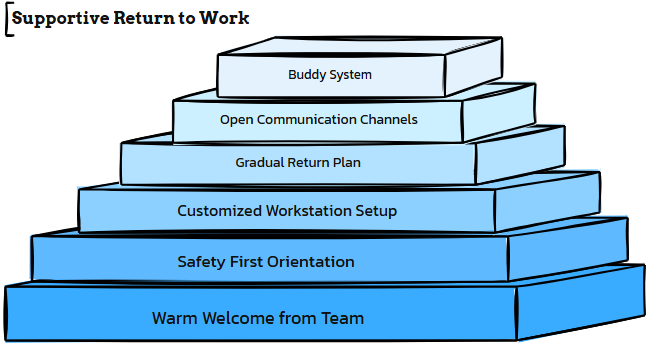
When workers return to the job after a serious injury, clinical recovery is only part of the equation. A growing body of research shows that supported return to work, where employers, supervisors, and coworkers actively facilitate reintegration is essential for positive outcomes. A 2024 study published in Frontiers in Rehabilitation Sciences surveyed 93 injured workers in Saskatchewan […]
Structured Return-to-Work Planning: The Framework Behind Safe Recovery and Long-Term Workplace Success
Returning to work after an injury, illness, or chronic health condition is a critical milestone, but without structure, it can also be one of the most vulnerable points in a person’s recovery. A well-designed Return-to-Work (RTW) plan does far more than outline a date for resumption of duties. It creates clarity, ensures legal compliance, mitigates […]
Empowering Recovery, Enhancing Productivity: The MAP™ Approach to Workplace Health
At the heart of every thriving organization is a simple truth: people want to feel productive. They want to contribute, to be part of something meaningful—even when facing health challenges. Bridges Health’s Stay-at-Work Managed Abilities Program (MAP™) is built on this very philosophy: Healthy workers want to be at work. Unlike traditional disability management models that […]
Early Intervention Strategies That Save Time and Money
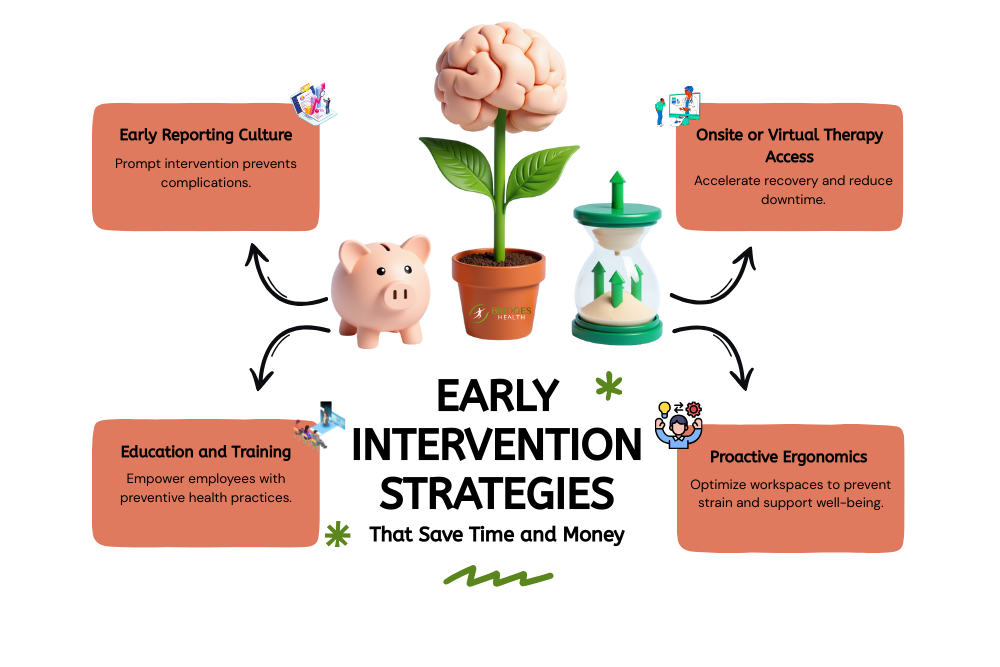
In occupational therapy and injury prevention, early action is one of the most powerful tools for reducing recovery time and controlling costs. When employers and healthcare providers, as well as disability management and workplace wellness consultants, intervene early in the disability cycle—before injuries become chronic or prolonged—they not only improve outcomes for individuals but also […]
Empowering Recovery, Enhancing Productivity: The MAP™ Approach to Workplace Health
At the heart of every thriving organization is a simple truth: people want to feel productive. They want to contribute, to be part of something meaningful—even when facing health challenges. Bridges Health’s Stay-at-Work Managed Abilities Program (MAP™) is built on this very philosophy: Healthy workers want to be at work. Unlike traditional disability management models that […]
Revealing Top Benefits Of Outsourced Injury Management Services

In Canada, workplace injuries pose a significant financial burden for organizations across many industries. In 2018, out of the $29.4 billion associated with both unintentional and intentional injuries, $9 billion came from indirect costs. Indirect costs, such as lost productivity, aren’t covered by Workers’ Compensation Boards and create financial challenges for employers. As such, an increasing number […]